
Leather Cleaning, Conditioning and Protection
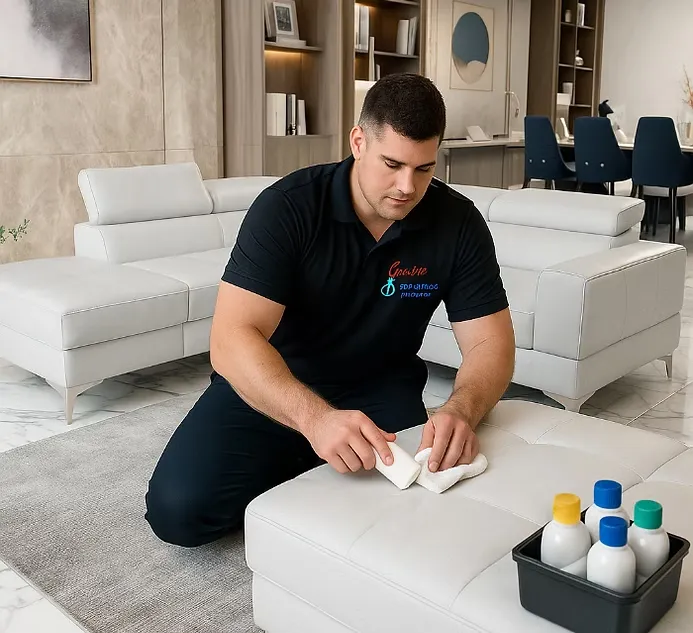
The Problem:
Leather is a porous natural material. If it is not professionally cleaned and nourished, the sun, heating, and body sebum dry it out, crack it, and permanently alter its color in irreversible ways.
Protect your investment. Our expert leather treatment cleans the pores deeply, eliminates stains (pen, jeans), and rehydrates the skin with premium revitalizing creams to restore its original suppleness and shine.
Our Expert Process (On Site)
Inspection and Identification
Determining the type of leather (pigmented, aniline, semi-aniline, nubuck) to choose the best-suited cleaning product pH without risking damage.
Deep Cleaning (Pore Extraction)
Application of a gentle cleaner using special brushes to open leather pores and extract embedded dirt, perspiration, and body oils.
Specific Stain Treatment
Manual treatment of problematic stains such as dye transfer (blue jeans on white leather), pen ink, or grease halos.
Hydration and Nourishment (Revitalization)
A crucial step. We manually massage the leather with a rich revitalizing cream. It penetrates the skin to restore its suppleness and prevent future cracking.
Protection (Sealant / Polishing)
Application of an invisible barrier that acts as a shield against future liquid spills, dirt, and UV rays from the sun (which discolor leather).
Why does your leather furniture age poorly?
Leather is exactly like human skin. If it is not washed and hydrated, it peels and cracks. The most common mistake is using household cleaning products or "miracle wipes" from big-box stores. These products contain strong detergents or synthetic waxes that dry leather over time and destroy its original protective finish. By calling our experts, you guarantee a pH-balanced treatment that extends the life of your living room furniture by several years.
Why Have Your Leather Cleaned by Professionals?
Service Areas — Leather Furniture Cleaning
We travel throughout Greater Montreal to treat your leathers at home.
Montreal (East and West)
Laval
Montreal South Shore
Frequently Asked Questions — Leather Service
Can you remove blue jeans transfer on my white leather sofa?
It depends on how long ago the transfer occurred and the type of leather. Pigmented leather can often be cleaned of this transfer if acted upon quickly. However, if the garment dye has had time to migrate deeply into the leather varnish (often due to body heat), it may act as a permanent dye. In the majority of cases, we obtain excellent results or very clear fading.
Do you repair torn, peeling leather or cat scratches?
Our expertise lies strictly in deep cleaning, hydration, and protecting the health of the leather skin. We do not perform tear repairs, re-dyeing (coloring), or panel replacement (upholstery). If your leather is peeling because it is 'fake leather' (Bonded Leather), cleaning will unfortunately not save the disintegrating material.
How often should I have my leather furniture treated?
For leather maintained in perfect condition, a professional treatment (cleaning and hydrating cream application) every 12 to 18 months is ideal. If your furniture is directly exposed to sunlight or located near a heat source (fireplace, electric baseboards), the leather will dry out faster; annual treatment is then strongly recommended.
Can I use supermarket cleaning wipes?
This is strongly discouraged by all manufacturers of quality upholstery leather. Most wipes contain solvents, alcohol, or silicones that dry out the leather and destroy its original protective varnish (Top Coat). At the moment, your sofa seems clean and shiny, but long-term, you are accelerating its aging and promoting cracks.
How long does it take for the revitalizer to dry before sitting down?
Generally, you can start using your leather furniture again about 1 to 2 hours after our departure. This delay allows the hydrating cream to completely penetrate the leather pores and the protection sealant to dry uniformly to avoid staining your clothes.
Do you clean all types of leather, including suede or nubuck?
Finished (pigmented) leather represents 90% of the furniture we treat and this process is very effective. For unfinished, semi-aniline, or very porous leathers like nubuck, the process is different and more delicate, as these leathers absorb liquids instantly. Our technicians will inspect your furniture before starting and recommend the dry or specific method suited to your type of sensitive leather.